Air Cargo /

orig-1200x800.jpeg

Singapore is set to become the epicentre of logistics innovation as transport logistic Southeast Asia & air cargo Southeast Asia 2025 prepares to open its doors. Hosted by MMI Asia, the event promises to bring together more than 10,000 professionals, 120 exhibitors from 27 countries, and over 150 industry leaders from across the globe. From digital transformation and sustainability to human capital and regional infrastructure, the event aims to chart the future of how goods move through one of the world’s fastest-growing trade corridors.

Michael Wilton, CEO and Managing Director of MMI Asia, said the event “serves as a catalyst for regional transformation—connecting industry leaders, innovators, and emerging talent to shape the future of logistics across ASEAN and beyond.”

Resilient supply chains in an uncertain world

The Main Stage will dive headfirst into the pressing realities shaping global logistics. “We’re addressing the twin forces reshaping supply chains today: U.S. tariff shifts and Southeast Asia’s rapid rise as a manufacturing and logistics hub,” said Wilton. The keynote, “From Fragile to Future-Proof: How Digital Tools and Human Talent Build Truly Resilient Logistics Networks” by Radu Palamariu, Group CEO of Alcott Global, sets the tone for a programme dedicated to resilience and adaptability.

Wilton added that the discussions will go far beyond theory. “Panels such as ‘Southeast Asia’s Transport and Logistics Horizon’ and ‘Shaping the Future of Supply Chains – Navigating Transformation Successfully’ feature leaders from Google, Boeing, and dsm-Firmenich, discussing how companies are diversifying sourcing, investing in ASEAN infrastructure, and leveraging AI-driven planning,” he said. These conversations will explore how logistics operators can not only manage tariff-related risks but also seize the opportunities presented by the region’s projected seven percent trade growth and US$46 billion in FDI inflows.

“The key takeaway is resilience through strategy and innovation,” Wilton noted. “Attendees will leave with insights into how technology and talent together create stronger, more adaptive logistics systems.”

The Changi advantage

A major highlight of the event will be the Centre Stage sessions, spotlighting the infrastructure driving Southeast Asia’s airfreight growth. “One of our most anticipated sessions is ‘Blueprint for Establishing a Regional Air Cargo Hub’ by Lim Ching Kiat, EVP of Changi Airport Group,” said Wilton. “It will give participants an insider’s view of Terminal 5 and how it’s designed to strengthen Singapore’s position as a strategic logistics hub.”

Terminal 5, currently under development, is being built with automation, SAF-ready infrastructure, and advanced cargo handling systems—features that Wilton believes will “significantly boost ASEAN connectivity, enabling faster, more efficient cargo flows across key trade lanes.”

Supporting sessions such as “Sustainable Growth of Air Cargo in Southeast Asia”—featuring executives from Etihad Airways Cargo, Qatar Airways Cargo, and MAB Kargo—will also explore how sustainability and capacity growth can coexist. “These developments support regional integration and resilience, positioning Southeast Asia as a global logistics gateway,” said Wilton.

The future of integrated logistics

For Wilton, one of the event’s defining features is its focus on actionable innovation. “Our Exhibitor Seminars demonstrate how AI, IoT, and predictive analytics are being used today to improve efficiency and collaboration,” he said. Sessions include “Digitalisation with AI” by Cargo Community Network, “Introduction to Siemens Digital Logistics Portfolio”, and “From Data to Decisions – AI and Visibility in the Future of Supply Chain Management” by BlueBox Systems.

However, Wilton is quick to point out that technology alone is not the answer. “Sessions like ‘Blame the Software? It’s Not Just the Tech That’s Holding You Back’ by Yojee Solutions dig into why digitalisation projects fail,” he said. “It’s about leadership alignment, change management, and cultural readiness. You can’t build a digital supply chain without addressing the human side.”

The sustainability agenda is equally central to the event. Day 2, themed “Paving the Way for a Greener Future,” will host panels such as “Achieving Net-Zero Carbon Emissions Goal with Sustainable Aviation Fuel (SAF)”, featuring Singapore Airlines and Boeing, alongside “Embedding Scope 3 to Progress towards Net Zero” with Toll Group and Wilhelmsen Ships Service. “These sessions provide clear, actionable roadmaps for decarbonisation,” Wilton said. “Southeast Asia has the potential to supply 12 percent of global SAF demand by 2050—and we’re showing how that can become reality.”

The next connection

Beyond its panels and presentations, the event will also serve as a major networking platform. With its dedicated event app for one-to-one meetings, Wilton said, “We’re ensuring every participant—whether they’re a startup, policymaker, or global enterprise—can build meaningful partnerships.”

The event will also nurture future talent through Future Leaders’ Day, featuring speakers from Alcott Global, Freightos Group, and MAB Kargo. “We’re giving young professionals access to mentorship, career insights, and the skills they’ll need for leadership in an evolving logistics industry,” he added.

Source


Swissport-International-AG.webp

  • Swissport has entered the Chinese market through a strategic partnership with Smargo (a joint venture between AVINEX Logistics and China Eastern Airlines Logistics) to operate the new Digital & Intelligent International Cargo Terminal at Shanghai Pudong Airport (PVG).
  • The state-of-the-art facility, opening in late 2025, spans 222,000 sq m with AI-driven warehouse management, 94 autonomous vehicles, and 15,000 sq m of temperature-controlled space—capable of handling up to 1.2 million tonnes of cargo annually.
  • The partnership strengthens Shanghai’s role as a global cargo hub, integrating Swissport’s global network to enable up to 40 percent faster e-commerce and pharma logistics, while marking the company’s long-term commitment to China’s aviation and trade growth.

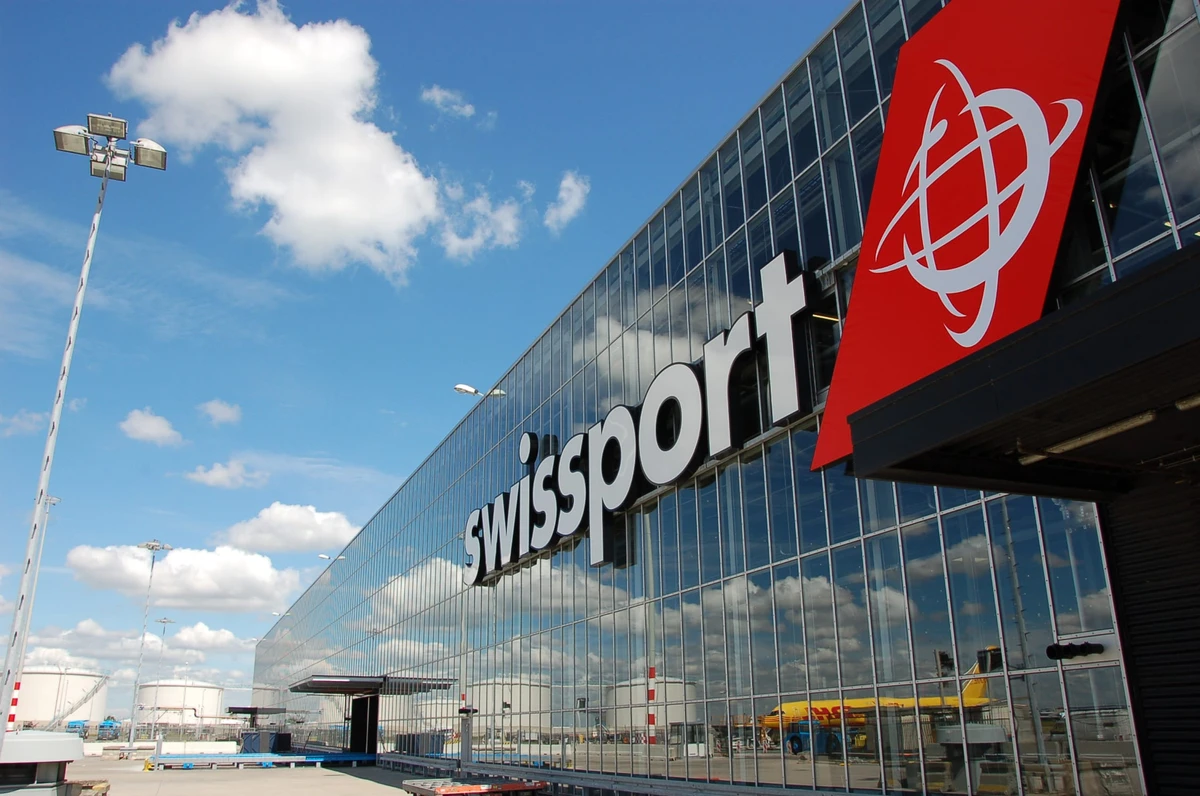
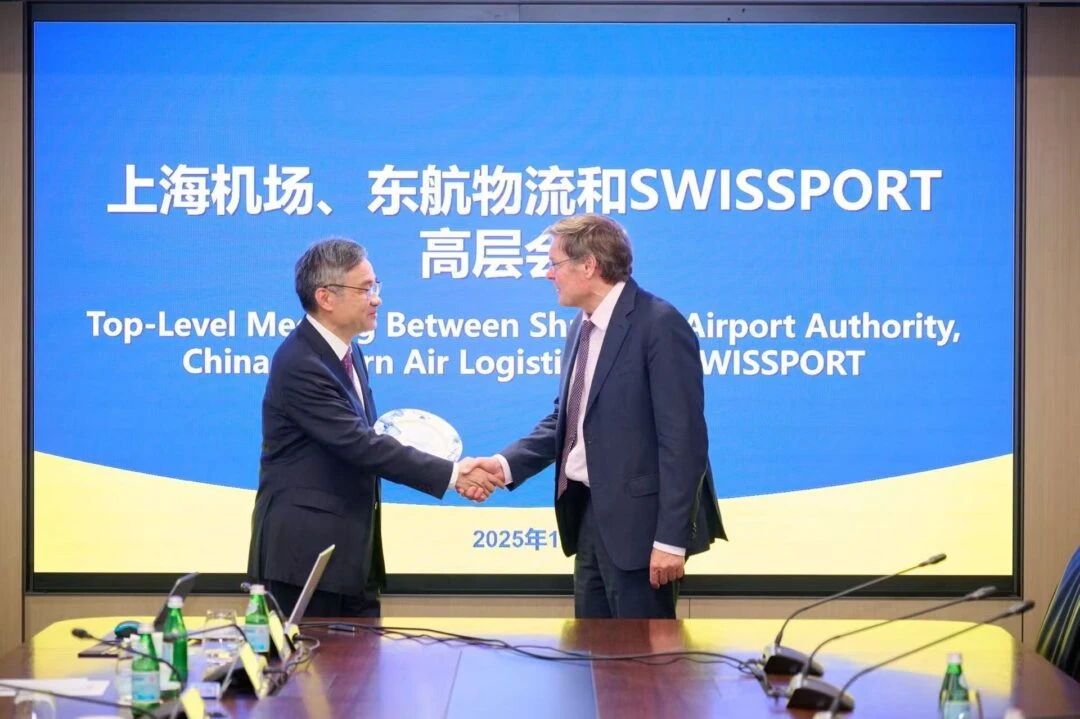
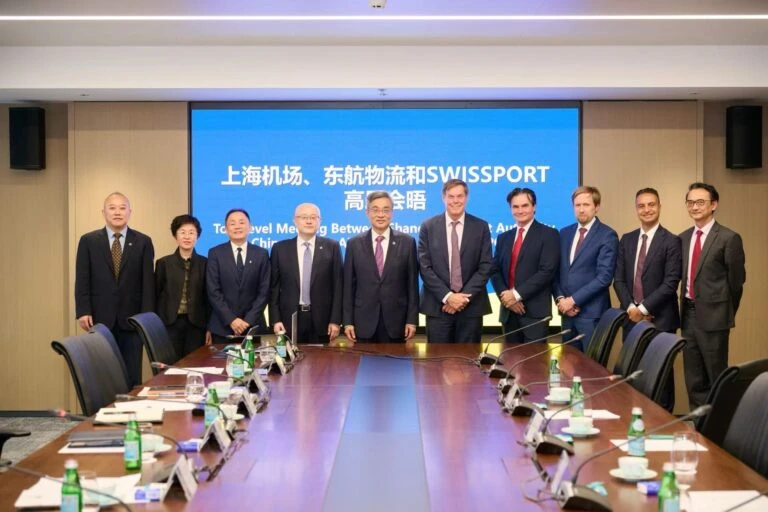
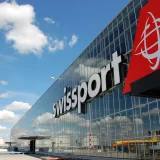
Swissport has announced its entry into the Chinese market through a strategic partnership with Smargo—a joint venture between AVINEX Logistics (Shanghai Airport Authority Logistics Development Company) and China Eastern Airlines Logistics. Together, they will manage and operate the cutting-edge Digital & Intelligent International Cargo Terminal at Shanghai Pudong International Airport (PVG), the world’s second-largest air cargo hub.

The signing ceremony, supported by the Shanghai Airport Authority and China Eastern Airlines Corporation Limited, marks Swissport’s official arrival in China. With operations at nearly 300 airports in 45 countries and handling five million tonnes of cargo annually across 117 stations, Swissport brings unmatched global connectivity to one of the world’s most important trade gateways.

“This milestone agreement marks Swissport’s strategic entry into China with one of the world’s most technologically advanced cargo facilities,” said Warwick Brady, President & CEO of Swissport International.

“By connecting Shanghai with our global network, we’ll enable Chinese exporters to reach international markets up to two days faster through our specialised e-commerce handling. Shanghai represents just the beginning of our long-term commitment to China’s aviation future.”

Brad Moore, CEO APAC at Swissport International, added: “Our new facility at Shanghai Pudong is a cornerstone of Swissport’s cargo strategy in Asia and reflects our long-term commitment to this dynamic market.

“By bringing our global expertise in specialised cargo handling to one of Asia’s most important air freight hubs, we are creating new efficiencies that strengthen the regional supply chain.”

The partnership comes as Pudong Airport continues to expand its role as a global air cargo hub, handling around 4 million tonnes annually with projected growth of up to 10 percent per year. The facility will create seamless two-way trade connections, enabling faster export flows from China and smoother imports into its vast domestic market.

Located in the West Cargo Area of Pudong Airport, the new state-of-the-art terminal covers 222,000 sq m, including a 150,000 sq m core operational zone. Representing a 1.56 billion yuan (US$215 million) investment, the facility will handle between 600,000 and 1.2 million tonnes of international cargo annually once operational in late 2025.

Equipped with AI-driven warehouse management achieving 99.5 percent scheduling accuracy and 94 autonomous vehicles, the terminal promises faster, error-free processing. It also features 15,000 sq m of temperature-controlled space and a 200 sq m ultra-deep freeze chamber, capable of storing 1,500 tonnes of pharmaceuticals, vaccines, and biomedical shipments.

Swissport’s global e-commerce network—including hubs in New York, Liège, Brussels, Basel, and Milan—gives Chinese exporters a competitive advantage. The Shanghai terminal’s automated sorting systems will process 3,500 parcels per hour, enabling up to 40 percent faster delivery to global markets.

Following the Pudong launch, Swissport plans to explore additional cargo opportunities across China’s major commercial centres. As the Digital & Intelligent International Cargo Terminal nears completion, Swissport, AVINEX, and China Eastern will collaborate to deliver one of the world’s most advanced air cargo operations—linking China’s booming export economy with the global marketplace.

Source


ROY00090Web-1200x659.jpg

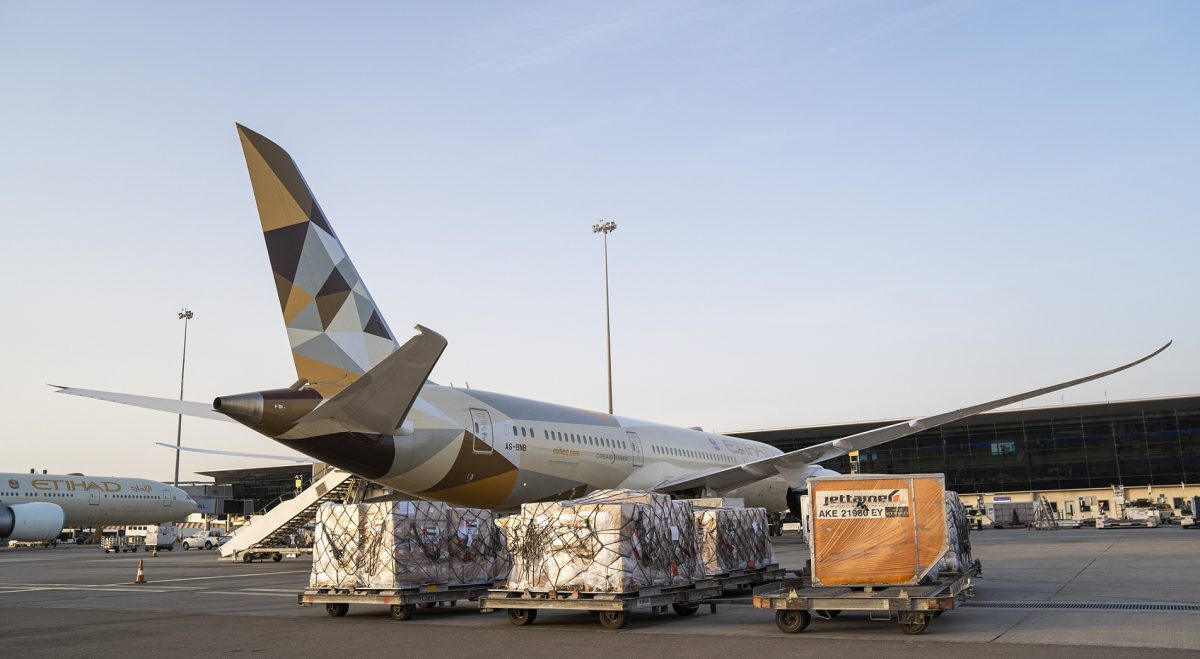
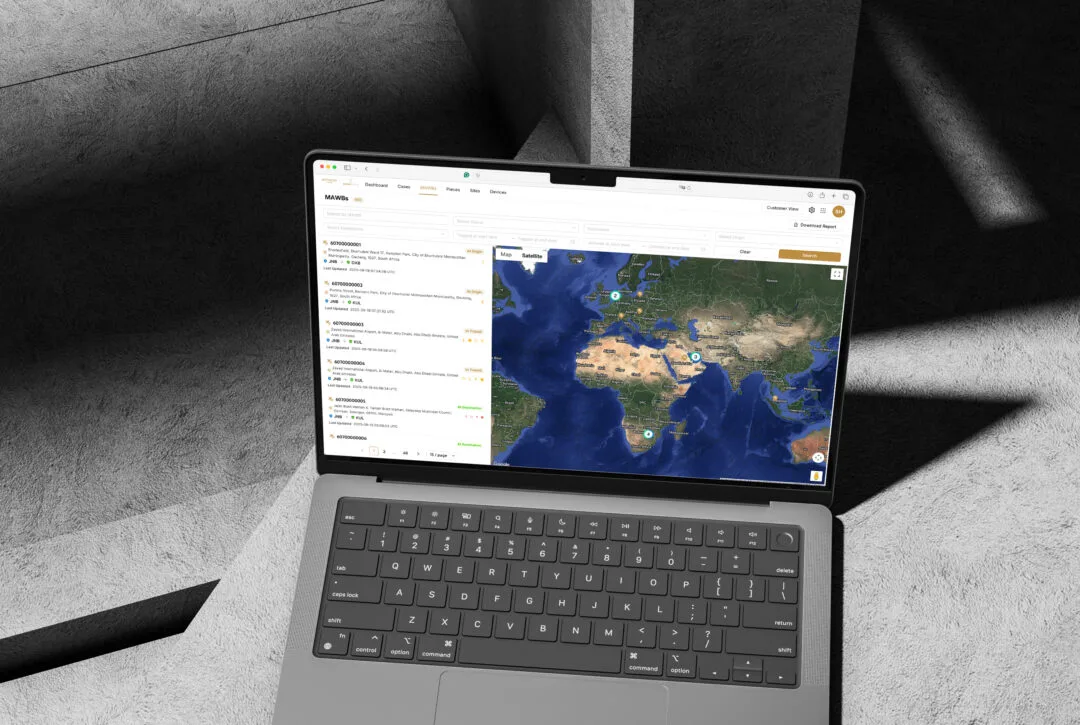
Etihad Cargo, the cargo and logistics arm of Etihad Airways, has officially launched SmartTrack, its premium shipment visibility service that enables customers to monitor their cargo in real time.

Unveiled earlier this year at Air Cargo Europe 2025 in Munich, SmartTrack is now available to customers worldwide through the Etihad Cargo website, making it the first air cargo carrier to bring such advanced smart tracking technology to market.

A New Benchmark

SmartTrack provides customers with unprecedented shipment visibility, delivering live location updates and condition monitoring across the supply chain. Using cellular, GPS and Wi-Fi connectivity, the solution offers instant alerts on temperature, humidity, shock, tilt and light events, ensuring greater reliability and proactive risk management.

To further support customers, Etihad Cargo has introduced a dedicated 24/7 SmartTrack Control Centre, providing live case tracking, severity-based alert prioritisation, and actionable workflows for real-time intervention, repair and resolution.

Alongside the control centre, Etihad Cargo has launched a new customer dashboard, offering a single, intuitive interface for shipment monitoring. Accessible via secure single sign-on across mobile and web platforms, the dashboard enables users to:

· Track shipments in real time by AWB, origin, destination or product type

· Monitor live sensor data and receive proactive SLA notifications

· Access custody chain insights covering pre- and post-Etihad Cargo handling

· Receive instant alerts on milestone delays, geofence violations and temperature excursions

Innovation in Action

The launch of SmartTrack was underpinned by extensive technical development in partnership with Tag-N-Trac. This included synchronisation of booking data, sensor event integration and geofence alerting to create a seamless customer experience.

Stanislas Brun, Chief Cargo Officer at Etihad Airways, said: “SmartTrack marks a major step forward in the way we support our customers. By integrating simplicity, intelligence and automation, we are providing greater confidence and control over shipments while setting a new benchmark for transparency in the industry. This innovation reflects Etihad Cargo’s broader vision: to harness digital transformation in order to deliver smarter, more resilient, and more customer-centric logistics solutions.”

SmartTrack is the latest milestone in Etihad Cargo’s digital roadmap, which focuses on innovation, operational excellence and exceeding customer expectations. By combining real-time tracking technology, round-the-clock monitoring and customer-first design, Etihad Cargo continues to reinforce its position as a leader in global air freight innovation.


fKMWb-mA-1200x800.jpeg

Emirates SkyCargo and Teleport, exclusive cargo partner of AirAsia, sign preferred partnership to combine global network and strengthen trade and eCommerce flows

 — Emirates SkyCargo, the cargo arm of the world’s largest international airline, has signed a Memorandum of Understanding (MoU) with Teleport, AirAsia’s exclusive cargo partner. The partnership aims to better support the burgeoning trade between Southeast Asia and the wider world, via Dubai.

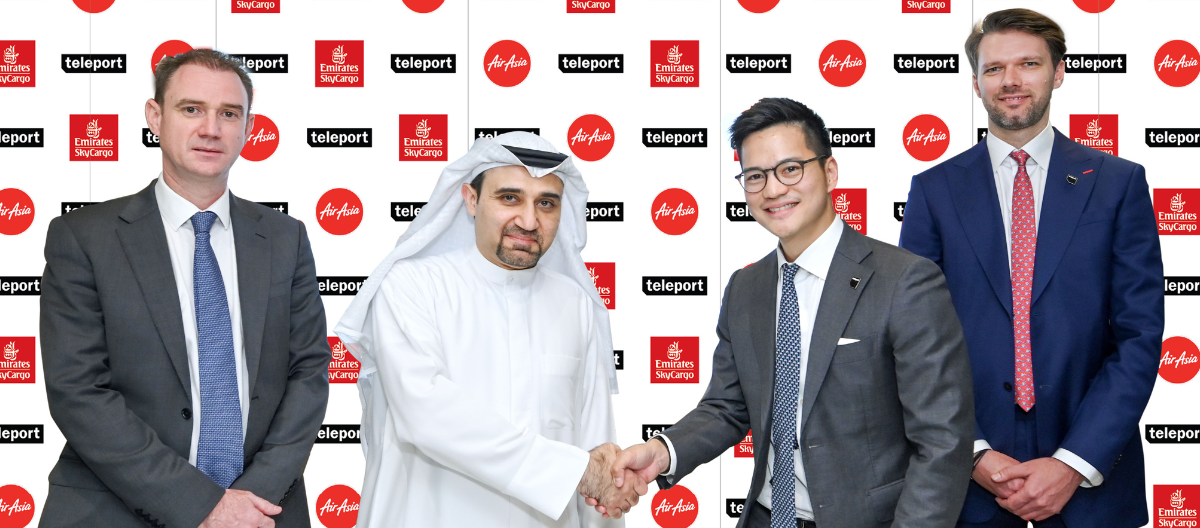
From left: Matthew Scott, Vice President Pricing, Airline Partnerships & Distribution, Emirates; Badr Abbas, Divisional Senior Vice President, Emirates SkyCargo; Pete Chareonwongsak, Chief Executive Officer, Teleport; Jan Philipp Poter, Chief Business Officer, Teleport.

  • The partnership provides Emirates SkyCargo access to bellyhold capacity on AirAsia airlines, significantly expanding and deepening its network reach into Asia.
  • Likewise, Teleport will have access to Emirates SkyCargo’s high frequency distribution network into key destinations in Europe, Africa and the US.

The agreement was signed at IATA’s World Cargo Symposium by Badr Abbas, Emirates SkyCargo’s Divisional Senior Vice President and Pete Chareonwongsak, CEO of Teleport. Under the terms of the MoU, Emirates SkyCargo and Teleport will work closely on a number of initiatives, which include expanding cargo interline options and block space agreements, to enhance connectivity and boost the reach of ASEAN businesses. 

Teleport exclusively consolidates the bellyhold capacity of all AirAsia’s short and medium-haul airline operations across Malaysia, Thailand, Indonesia, the Philippines and Cambodia into a single, largest air logistics network in Southeast Asia, together with three dedicated freighter services and 40+ other airlines. Combined, this expands Emirates SkyCargo’s reach into over 100 destinations beyond primary, but also into both secondary and tertiary airports in the Southeast Asian region. Conversely, Teleport will benefit from Emirates’ vast global network of over 145 destinations with a particular focus on key destinations in Europe, Africa and the US.

Commenting on the partnership, Badr Abbas said, “For almost 35 years, we have proudly served Southeast Asia, keeping goods flowing quickly, reliably and efficiently. This strategic partnership with Teleport and the AirAsia Group of airlines is an evolution of that commitment, enabling us to better serve our customers with increased capacity, more flexibility and access into new markets in Asia, combined with enhanced connectivity across our vast global network.”

Pete Chareonwongsak added, “2025 is a year of global scale for Teleport as we strengthen our Teleport Network reach and capacity to better meet the growing global demands of eCommerce. Our partnership with Emirates, which is the first of its kind in Southeast Asia for them, is a source of great pride as we collaborate with a leading global partner. This will enable the expansion of both our respective air networks, supporting Southeast Asia’s growing exports and facilitating the movement of eCommerce from China, through our connectivity beyond Southeast Asia, to the Middle East, Africa and Europe. Ecommerce is expected to double its share of Southeast Asia’s air cargo volumes from 11% to 20% by 2029, driven by lightweight, high-frequency shipments replacing bulk freight and the rise in demand for express delivery. With a shared commitment to provide faster, more efficient, and reliable cross-border air cargo services, this partnership enhances our combined capabilities to capture global market opportunities.”

Southeast Asia and the wider Asian continent are the backbone of global manufacturing, particularly for electronics, smart gadgets, fashion and textiles, machines, automobiles and pharmaceuticals. The partnership is set to support the world’s shifting supply chains, as Southeast Asia continues building its manufacturing and logistics capabilities. Southeast Asia outbound air cargo in 2024 amounted to ~2.5 million tons with greater flows expected to the Middle East and Europe, supported by manufacturing expansion, eCommerce, and improved infrastructure.

In recent years, the UAE and Southeast Asian countries have solidified their economic and bilateral relationship, with Comprehensive Economic Partnership Agreements (CEPA) signed between the UAE and Malaysia, Indonesia and Cambodia, with Vietnam and Thailand expected to follow. The agreement between Emirates SkyCargo and Teleport supports these prosperous relationships and lays a foundation for further growth, by improving trade flows and generating new opportunities that help strengthen global economies.

Source


dhl-group-temu-1592x896.web_.796.448.jpg

The agreement aims to enhance collaboration to better support local small and medium-sized enterprises (SMEs) in established markets as well as in growth markets, such as Eastern Europe and the Middle East.


  • Expansion of successful logistics cooperation to foster growth for SMEs in both established and new markets
  • Focus on logistical efficiency and compliant trade to drive mutual market expansion
  • DHL to support Temu’s local-to-local initiative, which expects to eventually account for 80% of its sales in Europe

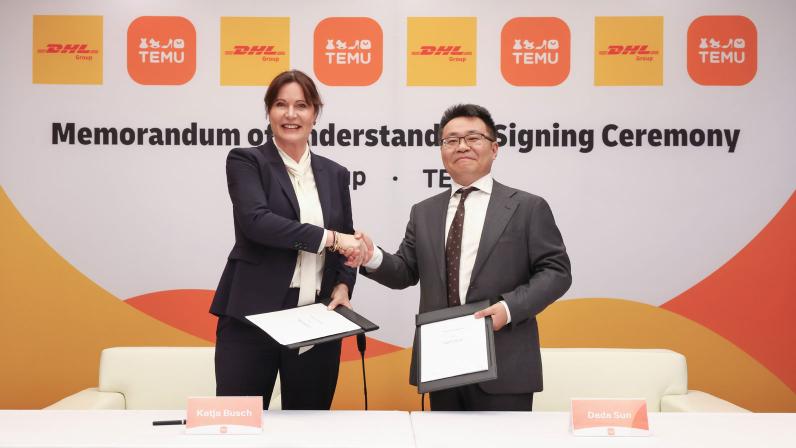
Bonn, Shenzhen – DHL Group has signed a Memorandum of Understanding (MoU) with the e-commerce marketplace Temu to deepen their cooperation and to further expand their successful partnership. The agreement aims to enhance collaboration to better support local small and medium-sized enterprises (SMEs) in established markets as well as in growth markets, such as Eastern Europe and the Middle East. Both parties are committed to fostering compliant trade and sustainable practices.

DHL Group will support Temu through its logistics expertise, including multimodal transportation solutions, to provide more efficient and sustainable supply chain services. With its dense network and global presence, DHL Group is the ideal partner to support Temu’s growth in both established and new markets.

“Through our various DHL divisions, we are already providing a wide range of logistics services and solutions, including air freight and last-mile delivery. We are excited to elevate our partnership with Temu to the next level. By combining our logistics capabilities with Temu’s innovative platform, we can create more efficient, compliant and convenient solutions that benefit both consumers and local businesses in the markets we serve,” states Katja Busch, CCO and Head of DHL Customer Solutions & Innovation.

As part of the Memorandum of Understanding, DHL Group will utilize its logistics expertise to support Temu’s operations in Europe, including its local-to-local model, which enables local merchandise partners to sell on its platform and supports local fulfillment. Temu expects up to 80% of its total sales in Europe to come from this local-to-local model. Additionally, the e-commerce platform will enable European-based sellers to reach global markets in the future. This allows, in particular, SMEs to scale and expand their businesses. DHL will also assist Temu in growing its presence in e-commerce markets, including the Europe, Middle East, and Africa (EMEA) regions.

“This letter of intent marks a significant step in our partnership with DHL Group. Its extensive network and logistics capabilities will help support our mission to increase consumer access to affordable products and help increase growth opportunities for sellers,” states Qin Sun, co-founder of Temu.

Source


maxresdefault-1200x675.jpg

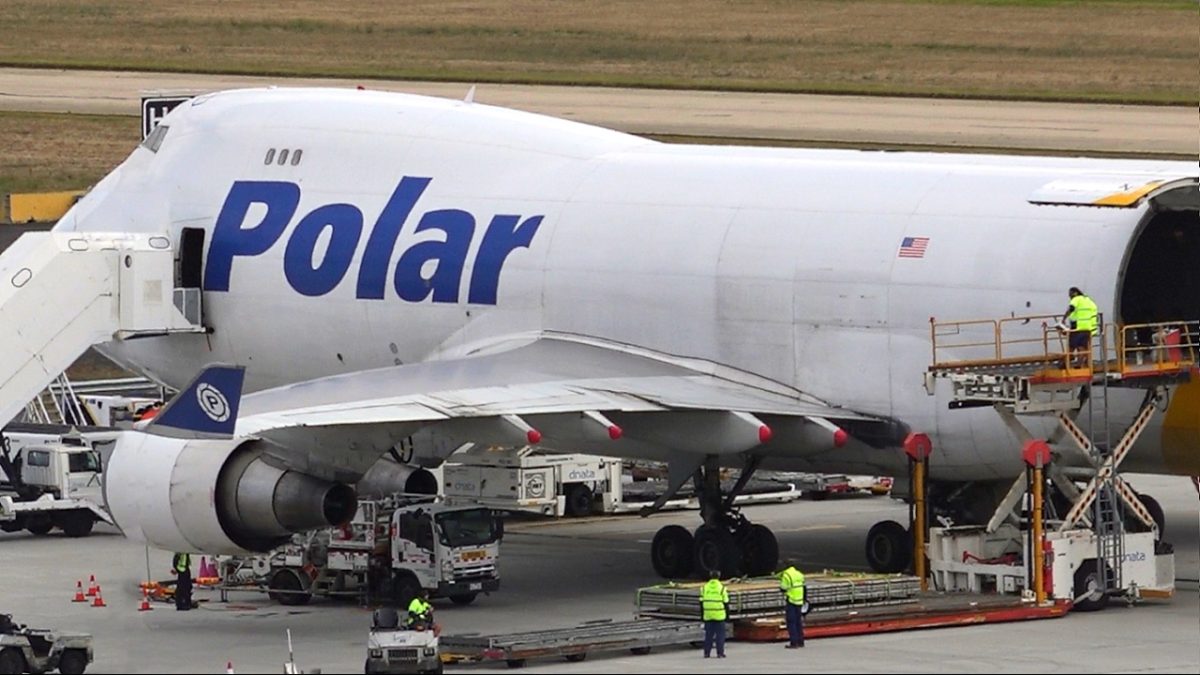
Atlas Air Worldwide and DHL have announced they will be closing their joint venture, Polar Air Cargo, after 17 years of operations.

The decision comes as both companies shift their strategic priorities, although an exact date for the closure has yet to be confirmed.

A spokesperson for Atlas Air Worldwide stated that the joint venture no longer aligns with the strategic direction of either shareholder company.

Despite Polar Air Cargo’s closure, Atlas will continue to operate some of its freighters for DHL Express, while the remaining aircraft will be redeployed within Atlas’s global operations.

Polar currently operates a fleet of four Boeing 747-8 freighters and two Boeing 777 freighters, down from four 777Fs last year.

Atlas confirmed that it would retain Polar’s operating certificate while continuing to support DHL Express under an extended outsourced agreement for two 777Fs.

Meanwhile, the four 747-8Fs previously operated for DHL will now be redeployed with other Atlas customers under long-term agreements.

Atlas Air also highlighted that the closure of Polar Air Cargo aligns with its ‘One Atlas Strategy’, a business model focused on diversifying its customer base.

This strategy includes working with direct shippers, e-commerce platforms, express carriers, airlines, freight forwarders, and ocean shipping companies.

“With an unmatched global footprint, scalable network, and the best team in the industry, Atlas is strengthening its position as the world leader in outsourced aviation logistics,” the company said.

Source


iStock-1060529186-1200x832.jpg

AIR CARGO FACES SLOW START TO 2025 BUT FEARS OVER TRADE WAR IMPACT ‘PREMATURE’ – XENETA

February 5, 2025

Global air cargo demand came lower than expected in January, posting a growth of only 2% year-on-year, according to a new Xeneta analysis, but brewing fears over recent tariff announcements affecting volumes and growth forecasts for the year may be premature.

The drop in demand for January was a “surprise,” said Niall van de Wouw, chief airfreight officer at Xeneta, amid double-digit monthly growth throughout 2024. However, he pointed out that January’s data was impacted by the earlier Lunar New Year reducing volumes out of China.

However, van de Wouw sees “no immediate reason” to change Xeneta’s 4-6% growth forecast for global air cargo in 2025 despite the market’s nervousness over new tariffs introduced by the United States – particularly on China -and their subsequent retaliation.

“The lower growth in air cargo demand in January was not down to President Trump, nor, entirely, the earlier Lunar New Year. It also compares to an unusually high comparison in January 2024,” van de Wouw said.

“Nonetheless, the air cargo market in entering a period of uncertainty, which makes planning extremely challenging.”

van de Wouw noted that the implementation of tariffs by the U.S. — announced earlier this month — and the responses of China, Canada, and Mexico are just the start of a negotiation.

“It’s all transactional. We could end up in a global trade war, but in the case of President Trump, we have someone who’s ready to negotiate everything, and the rest of the world can influence the outcome, as we have already seen. The consistency here is he’s looking for a deal,” he added.

“We don’t know what will happen, but we do understand that uncertainty is not good for trade confidence, and it doesn’t help investment. People like to see some kind of stability before they put their money down,” he added.

van de Wouw then cautioned shippers from “rushing to make too many plans or take any drastic measures.”

“I’d have my team ready to do things differently, but I’d wait to see what actually happens because, right now, there’s a lot of sabre rattling and noise but little clarity,” he said.

Source: asiacargonews.com

Read full article at: https://asiacargonews.com/en/news/detail?id=10503


Malaysia-based cargo airline Teleport has continued to expand its airline partnerships through a new agreement with VietJet.

The two airlines this week signed a Memorandum of Understanding (MoU) at the Air Cargo Southeast Asia 2023 event in Singapore.

The partnership will combine Teleport’s Southeast Asia network with VietJet’s global operations.

The move will help Teleport capitalise on growing demand in Vietnam, the carrier said.

Francis Antony, cargo group head of Teleport, said: “Our partnership with VietJetAir Cargo is timely as Vietnam is clearly growing to be a key market in Southeast Asia, with increasing manufacturing lines shifting to the country in recent years, contributing to more than 20% to the country’s GDP in 2022.

“VietJetAIr Cargo will be able to leverage our freighter capacity and we are able to move goods across key lanes such as Kuala Lumpur to Vietnam.

“Together, we will bolster economic connectivity between Vietnam and the region, ensuring seamless connectivity and enhanced services for both our customers.”

Nelson Wu, Vietjet air cargo managing director, said that its customers would benefit from access to new locations and faster speeds.

“This especially empowers our businesses in Southeast Asia to engage in global trade with greater ease and confidence in the coming time,” Wu said.

The deal is the second Teleport has signed in the last month.

At the start of October, the carrier announced an interline agreement with China-based express carrier SF Airlines.

Teleport brings to the table access into Southeast Asia, and SF Airlines a large express network within China and outbound into European and North American markets.

The move comes as Teleport looks to create new cargo streams to fill the holds of its expanding fleet.

The carrier is in the process of adding 10 converted A321 freighters, with the first delivered in July of this year.

source: www.aircargonews.net